Materials and design
Painted or Natural Wood Cabinetry?
A painted look offers a specific color, while natural wood highlights grain and character. At Azar’s Woodcraft, we achieve paint-color cabinetry with a color-matched wood finish—not conventional house paint.
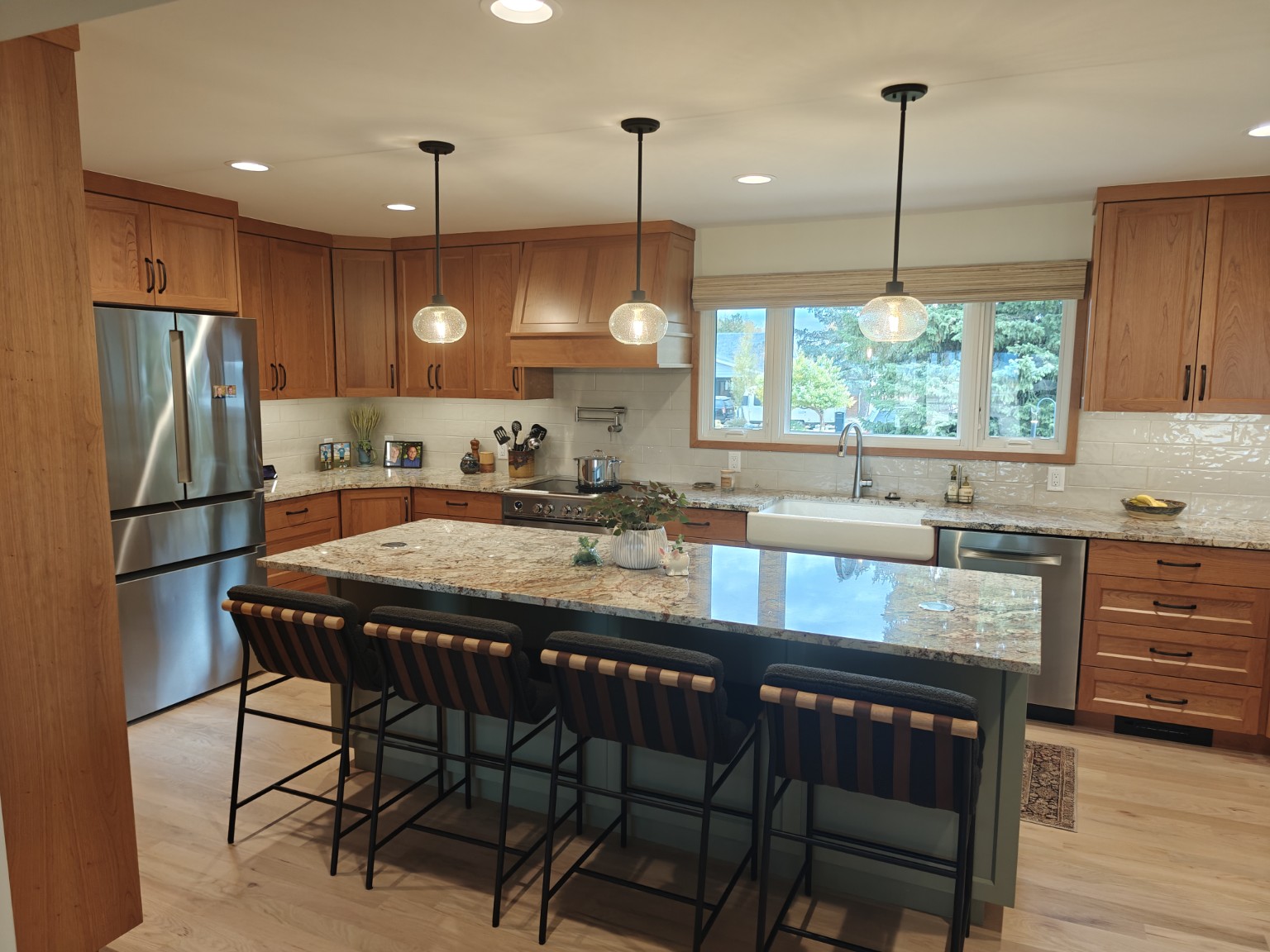
What we mean by “painted” cabinetry
We use the word “painted” loosely because it describes the look customers are familiar with—not the finishing process we use. At Azar’s Woodcraft, we don’t paint cabinets with conventional house paint. We finish them with professional wood-finishing products, tinted to match your selected paint color. That means you can choose the color you love while getting a finish intended for cabinetry and woodworking.
Why do we do it this way? We choose wood finishes for their durability and cleanability. Compared with conventional paint, a properly applied cabinet-grade finish is designed to stand up better to everyday handling and cleaning. It also helps us avoid common paint-related frustrations such as tacky or sticking doors, peeling, and discoloration or yellowing. No finish is completely immune to wear or color change, but using the right finishing system makes a meaningful difference.
Color, sheen, door style, and lighting all affect the final appearance. We recommend reviewing a finished sample before making your selection.
What natural wood brings to a room
Species, grain cut, and finish all contribute to the appearance. Oak can bring a distinct grain pattern, while walnut can bring deeper tones and visible color variation. A clear finish lets those differences show. A stain shifts the color while allowing the grain to remain visible, and the same stain can look different across boards.
Compare samples where the cabinets will go
Look at samples upright beside the flooring, countertop, and wall colors. Check them in daylight and with the lights you normally use in the evening. For natural wood, ask to see a few samples so you can judge the range of color and grain. For a paint-color finish, look at the actual finished sample—both the color and the sheen.
Think about daily wear
Around a sink, trash pullout, or heavily used drawer, both finishes benefit from regular cleaning with a soft cloth and prompt attention to spills. Even a durable wood finish can chip if struck hard, especially when the color contrasts with the material beneath. Wood grain can help some small marks blend in, depending on the finish and the character of the wood. Ask what cleaning and touch-up methods suit the finish you choose.
Try both if the room calls for it
A wood island, open shelf, or vanity can add grain and warmth alongside color-finished cabinetry. Start with one finish for the largest area, then choose where the second finish should go. Compare both samples together so the wood tones and selected color undertones feel intentional.